


With osteochondrosis, a gradual destruction of the spinal tissue occurs, which leads to a violation of its function.Normally, these degenerative processes develop in its most mobile parts.Young people more often suffer from cervical osteochondrosis.The instability of this section, combined with increased physical activity, explains its susceptibility to injuries and various degenerative processes.In 3 out of 10 cases it is the cause of sudden headaches.Osteochondrosis causes metabolic disorders in the spine.Because of this, the discs in it swell and then crack.
Symptoms
Various signs may indicate dystrophic changes in the spine.Depending on the stage of the disease, they are more or less pronounced.Cervical osteochondrosis has the following symptoms:
- Pain in the neck, neck, shoulder.Strengthens even with light load.
- Numbness in the extremities.
- Creaks when turning the neck.
- Headache, located mainly in the neck and temples.
- Fainting, chronic fatigue.
- Tinnitus, hearing loss.
- Loss of visual acuity.
Persistent pain in the heart area may also indicate cervical osteochondrosis.The patient usually experiences sensations similar to those of angina pectoris.When the spinal root is pinched, other disorders occur.For example, loss of tongue sensitivity or decreased neck muscle tone, breathing problems.If treatment is not prescribed in time, the patient may develop a lump or hernia.
There are four stages of osteochondrosis.The first is characterized by instability of the intervertebral discs.In the second, the main symptom is considered to be protrusion.At the same time, the spaces between the vertebrae become smaller.A pain syndrome occurs, which may be associated with pinched nerve roots.
In the third stage, the destruction of the annulus fibrosus occurs, which is an integral part of the intervertebral disc.That is why its deformation subsequently occurs.A patient with the fourth stage of cervical osteochondrosis experiences severe pain with any movement.It is worth noting that a decrease in its intensity does not indicate recovery.On the contrary, this indicates that the process of formation of osteophytes that connect the vertebrae has begun.As a rule, this leads to disability.Treatment is prescribed depending on the clinical signs and the stage of development of the pathology.
Causes of the disease
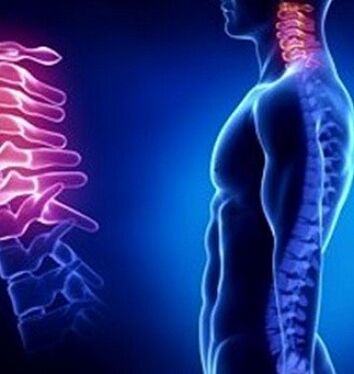
Sedentary work is often accompanied by cervical osteochondrosis.This part of the spine is quite compact and therefore even slight muscle tension causes compression of nerve endings and blood vessels.Against this background, osteophytes often form, which only worsens the situation.In addition to a sedentary lifestyle, the disease can be triggered by:
- metabolic disorders;
- unhealthy diet;
- salt deposition in the cervical spine;
- hypothermia;
- hereditary predisposition;
- cervical spine injuries;
- rheumatism.
The development of the disease can also be due to a curvature of the spine or excess weight.People with poor physical shape or athletes who make mistakes in the training process are at risk.
Which doctor treats cervical osteochondrosis?
To avoid the development of complications, at the first signs of impingement of the spinal nerve roots, you should seek help from a specialist doctor.Cervical osteochondrosis and its symptoms are treated by neurologists, chiropractors and osteopaths.
Additionally, you may need to consult a neurosurgeon, traumatologist, therapist, or cardiologist.To differentiate the diagnosis, the doctor analyzes the patient's complaints.At this stage, you ask the patient the following questions:

- When did neck pain first appear?
- Is cervical osteochondrosis accompanied by other symptoms?
- Does the patient's professional activity involve lifting heavy objects or keeping the neck still for a long time?
- What is the patient's fitness level?
- Does the patient have signs of neurological disorders?
To assess the condition of the spine, the doctor prescribes x-rays, CT scans or MRIs.Depending on the symptoms and stage of the disease, treatment may include massage, swimming, and exercise therapy.Local destruction processes are affected by acupuncture.In case of severe pain, the doctor prescribes anesthetics.Tension in the muscles is relieved with muscle relaxants.In advanced cases, when the patient has a hernia that compresses the roots of the spinal cord, surgical intervention is necessary.
What happens if the disease is not treated?
In the absence of qualified medical care, the patient eventually develops chronic pain in the cervical spine.It radiates to the upper and lower extremities, which can cause paralysis.As osteophytes grow, they compress nerve canals, veins and arteries.This can alter the cerebral circulation process.This often causes spinal ischemia and strokes.The patient's vision and hearing also deteriorate, migraines and vegetative-vascular dystonia appear.
By studying cervical osteochondrosis and its clinical symptoms, doctors usually diagnose radiculopathy.It leads to partial or complete loss of spinal mobility.The appearance of exacerbations is a reason for hospitalization of the patient.The most serious consequence of cervical osteochondrosis is considered to be compression of the spinal cord.The risk of death is quite high.To avoid the development of complications, it is necessary to consult a doctor as soon as possible.The work schedule should be soft.You should do special exercises every day and, if possible, morning exercises.